


Success in Life Starts with Great Attendance
Watergrove Trust recognises that attending school regularly has a positive impact on learning, progress and the social and emotional wellbeing of its learners, giving them the best life chances and preparing them for their future.
We ask that parents and carers work with our schools to ensure the best possible attendance for their children and to read our Attendance Matters publication that contains key information.
Reporting Absence
To report your child’s absence, please phone the school on 01706 647 533 and select option one.
The school day times can be found here.
Parents should inform the school of the reason for their child’s absence so that the school can:
- Determine if the child’s absence needs to be excused in line with school policy.
- Determine the appropriate follow up to ensure the child’s education and wellbeing are supported.
- Record if the parent has a reasonable excuse for not meeting their obligation to ensure their child attends school each day.
- Where possible, parents should inform the school in advance of upcoming absences.
Absence Concerns
If you have any concerns about your child, please contact school and ask to speak to the dedicated Attendance Officer.
NHS Guidance
The NHS website contains useful information to identify and support illnesses for children attending school.
Policies
For information on our attendance policy, please look at our centralised policies page.
The school fines for unauthorised absence are changed from 19th August 2024. You can find the details here. School follows DfE and LA guidelines.

Kentmere Academy is proudly recognised as an Inclusive Attendance school. Our unwavering commitment to attendance centres around child-centric actions, evidence-informed practices, and a shared understanding of everyone’s roles and collective responsibilities to promote exceptional attendance.
Multi-Tiered System of Support
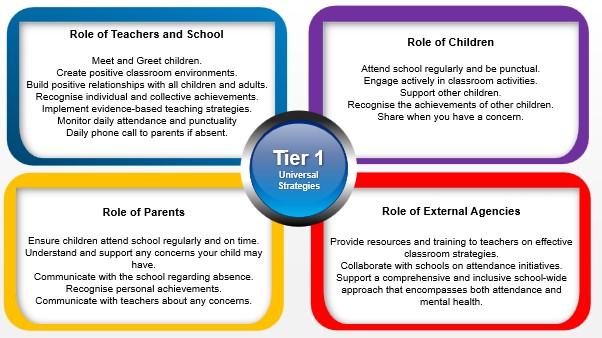
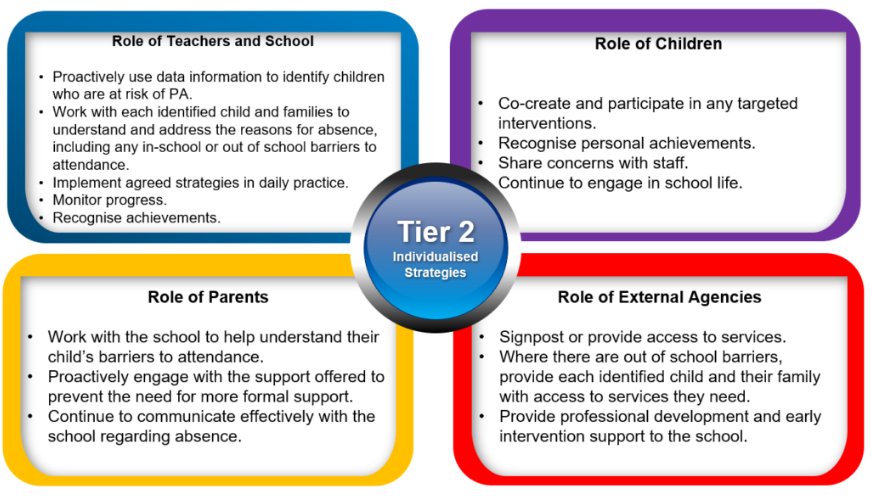
To guarantee a comprehensive approach to attendance, we implement a Multi-Tiered System of Support. A Multi-Tiered System of Support (MTSS) for school attendance involves three tiers of intervention, with roles for teachers, the school, children, parents, and external agencies – including the Local Authority. Data-driven decision-making and training requirements are pivotal to the implementation of the system. The system aligns with the Department for Education’s (DFE) “Working Together to Improve School Attendance” guidelines.
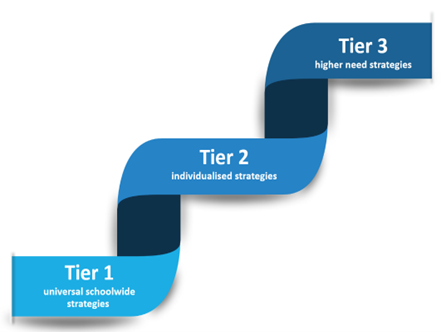
Tier 1 – Universal Approach: A universal attendance approach that benefits all children.
Tier 2 – Individualised Strategies and Early Help Support: Tailoring strategies to individual needs and providing early help support for persistent attendance challenges.
Tier 3 – Higher Needs Strategies Support: Specialised support for children, young people, and families with complex attendance requirements, including access to external agency support when necessary.
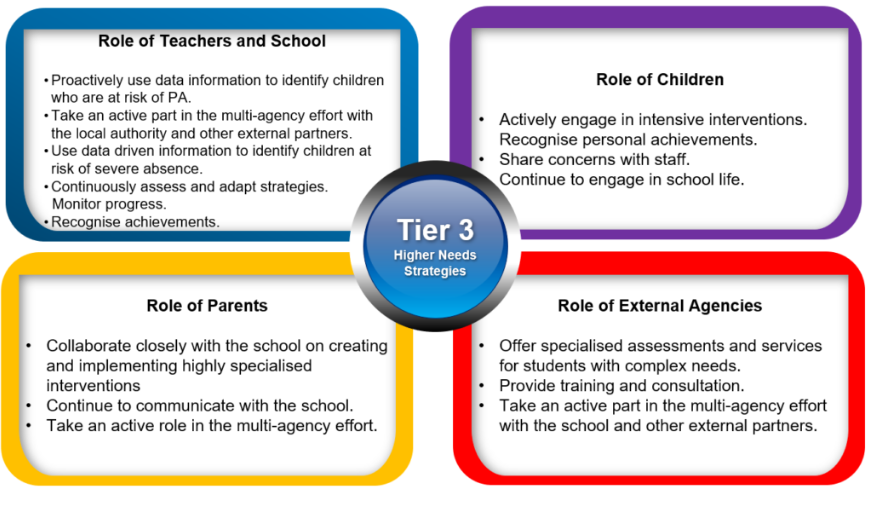
Recognition Based Approach
Our attendance philosophy is rooted in a recognition-based approach that recognises both personal and collective achievements. This approach serves to cultivate positive environments, nurture relationships, foster inclusivity, and ultimately cultivate intrinsic motivation among our children, families, and staff.
The Importance of School Attendance
School attendance is not merely a requirement but a fundamental part of education. It plays an important role in shaping academic success, personal growth, and future prospects, making it an essential aspect of any educational system.
- Relationships: School provides a vital social environment for children to interact with peers, develop friendships, and learn essential social skills. Consistent attendance ensures children remain connected to their peer group.
- Teacher Interaction: Regular attendance allows for meaningful teacher-child interactions. Teachers can provide personalised support, address questions, and assess individual progress more effectively when children attend regularly.
- Wellbeing: High levels of school attendance contribute to the overall wellbeing.
- School Engagement: Children who attend school regularly are more likely to engage in extracurricular activities, sports, and other enriching experiences that contribute to their overall development.
- Academic Achievement: Regular attendance directly correlates with academic success. Children who attend school consistently are more likely to keep up with the curriculum, perform better in exams, and improve their life outcomes.
- Sticky Knowledge: School is where children acquire knowledge and skills that are crucial for their personal and professional growth. Missing days means missing out on valuable learning opportunities.
- Preventing Knowledge Gaps: Frequent absences can lead to significant knowledge gaps, making it challenging for children to catch up with missed lessons, potentially resulting in long-term academic struggles.
- Building Routine: School attendance establishes a structured routine in children’s lives, teaching them time management and responsibility, which are valuable life skills.
- Legal and Parental Responsibility: Parents or guardians are legally responsible for ensuring their child’s regular school attendance. Failing to do so can lead to legal consequences.


